


👋 Hiya, work bestie!
Most of the time, when someone gives job search advice, it goes something like this: “Apply to everything within the first week that it gets posted. And make sure you’re tailoring your resume specifically for each company.”
Hey, I get it. That's straight-forward advice. It even feels productive. You feed ChatGPT the job posting and your LinkedIn profile and blammo… out pops another perfect resume.
But here’s the thing most hiring managers aren’t saying out loud: “Resumes rarely decide who gets an interview.”
To understand why, think about what they’re actually dealing with.
Resumes are junk mail. Referrals are Yelp reviews.
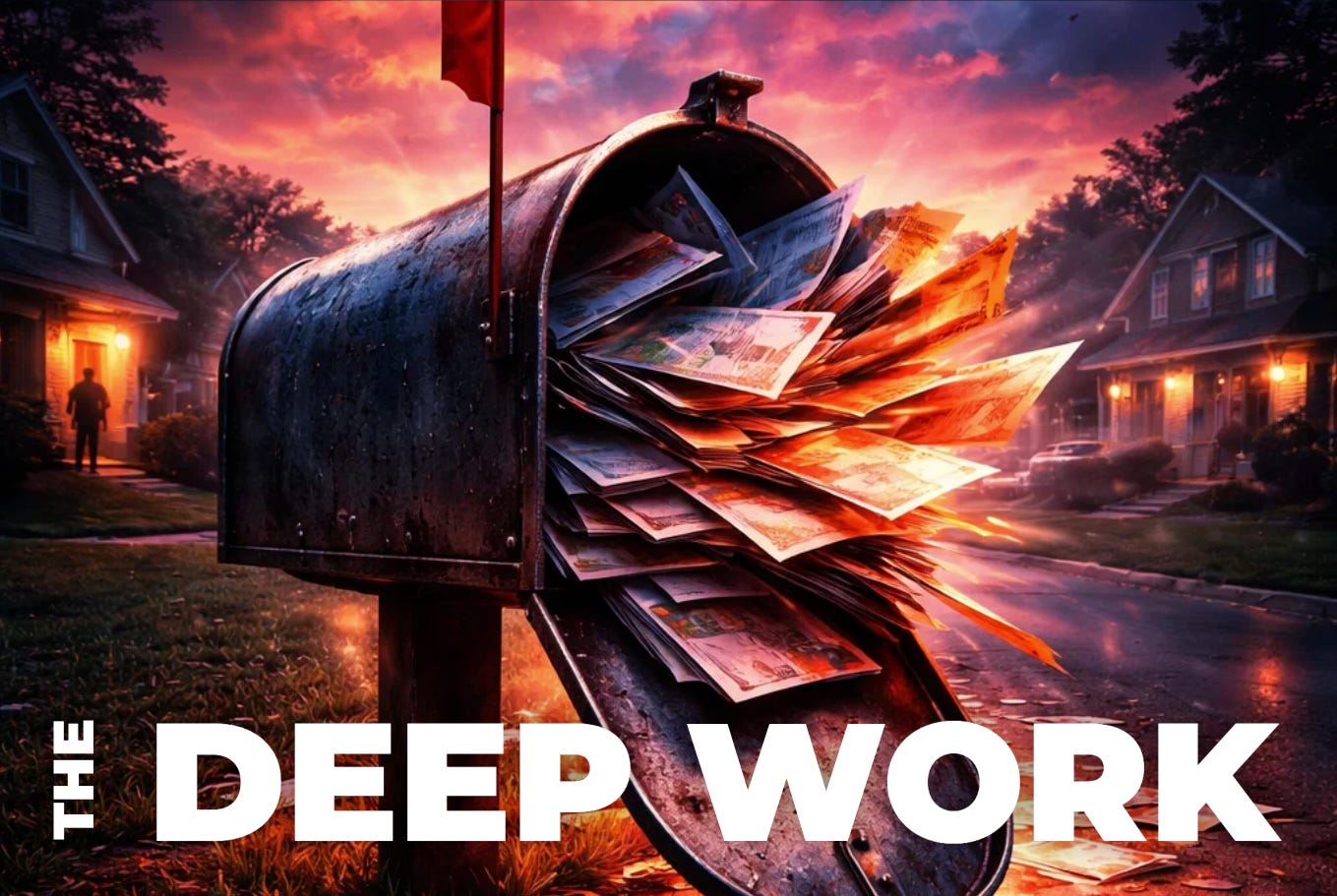
Imagine the worst junk mail day you’ve ever had. The one when the mailbox wouldn’t even close. I bet you brought that mail inside and tossed it on the kitchen table. What if that happened every single day for a month?
Now imagine it’s winter. Your furnace just died and you need help NOW.
Are you going to sift through that towering pile of junk hoping to find an HVAC company, or are you going to jump on Yelp to find the best reviewed one in your area?
Your perfect resume is just one more piece of junk mail. Maybe the hiring manager looks at it, but even so, it was likely only for six seconds before it ended up on their kitchen table.
The Yelp review? That’s someone inside the company telling them: “Hey, I worked with this person before. They’re friggin’ awesome.”
And it’s how most interviews are happening in the real world. I mean, companies are giving their employees referral bonuses for a reason. They’re literally paying to not have to sift through that pile.
So why do most people avoid the referral route?
Because it’s uncomfortable. It’s awkward to reach out to someone you haven’t spoken to in two years. You don’t want to bother them and you don’t want to be rejected.
I hear you. I don’t like asking for favors either.
But here’s the thing you need to hear: you’re not asking for a favor. You’re offering them an opportunity. They’re likely getting some cash in their pocket if you get hired.
So here are my suggestions:
Prioritize jobs where you know someone who works there.
Reach out to them before you submit an application.
Tell them you’re interested and ask questions about the company.
They usually connect the dots and offer the referral all on their own.
But don’t hesitate to ask directly. Remember, it’s a win-win.
If you want a referral, there’s an app for that.
I built Side Doors specifically to solve this problem. It's a Chrome extension that cuts through the noise on LinkedIn's job board and helps you find the right companies, the right people to talk to, and the best opening lines to land that referral. It's completely free, so go ahead and give it a test run and see why sending out junk mail is no longer necessary.
The deep dive? If you want to go even deeper on leveraging your network to find job opportunities, I highly recommend The 2-Hour Job Search by Steve Dalton. It's a practical system for organizing your search, identifying target companies, and getting referrals without feeling sleazy about it.
Remember, feeling productive isn't the same as being productive. When it comes to job searching, it's often just one person putting in a good word that creates the momentum you need to get to the finish line.
Referrals > Resumes,
✌️ Steve